Equal Parenting Time and Child Support in Missouri
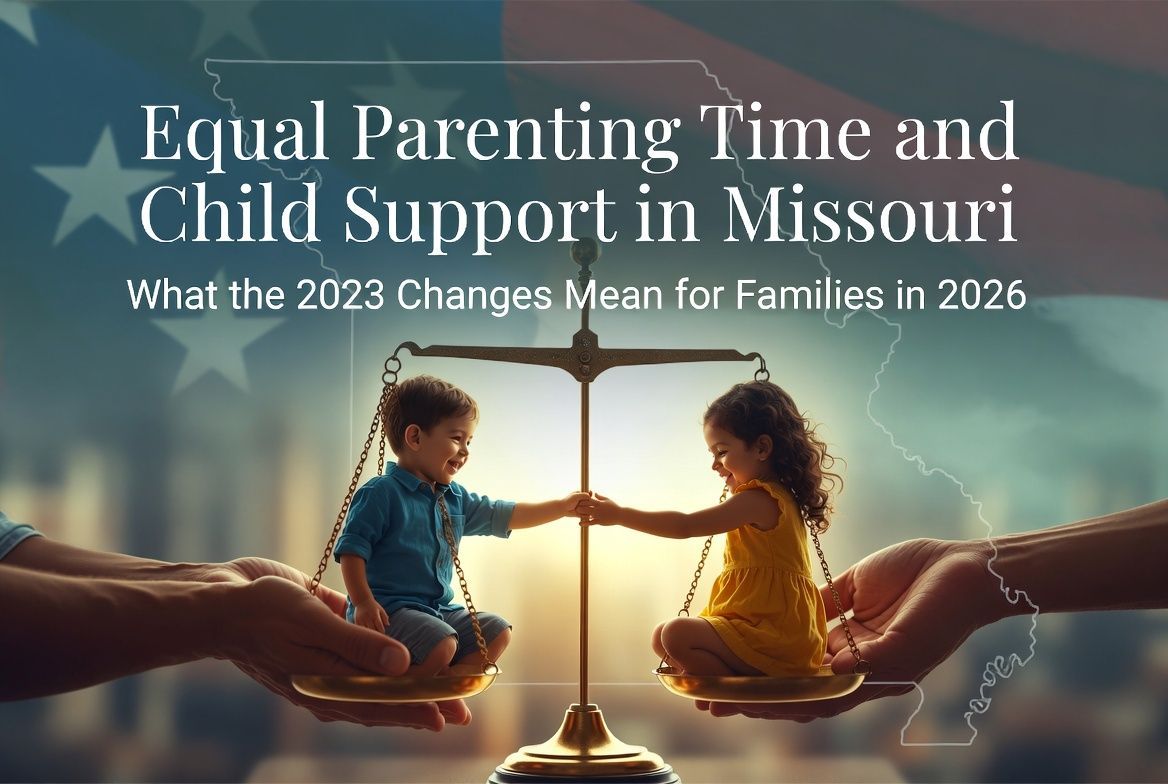
Equal Parenting Time and Child Support in Missouri:
What the 2023 Changes Mean for Families in 2026
Susan L. Ward
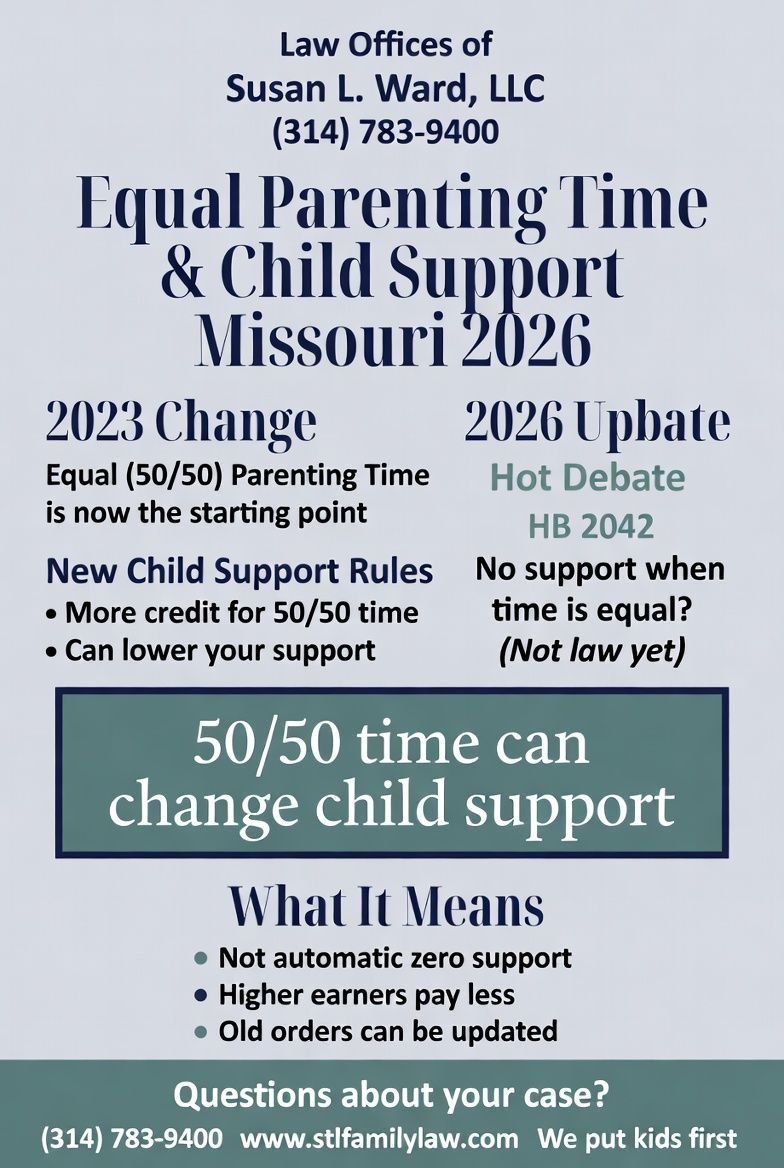
At the Law Offices of Susan L. Ward, we’ve been practicing family law exclusively for more than twenty years, and we see firsthand how big shifts in the law ripple through real families every day. One of the biggest changes came in 2023 with the rebuttable presumption for approximately equal (or 50/50) parenting time. Parents and lawyers are still feeling the effects—especially now that the new Form 14 child support worksheet rolled out and bills like HB 2042 are stirring up fresh debate.
If you’re a Missouri parent dealing with divorce, modification, or child support, you’ve probably asked yourself: Does going for equal time automatically change what I pay or receive? The short answer is—it can, but it’s not automatic, and the details matter a lot. Here’s what we’re seeing in practice right now and what you need to know.
How the 2023 Law Changed the Game
Before 2023, Missouri courts looked at a list of factors to decide parenting time, and equal time was just one possible outcome. The new rebuttable presumption flipped the script: courts now start with the assumption that roughly equal parenting time is in the child’s best interest—unless one parent proves otherwise with solid evidence.
We’ve helped dozens of clients navigate this. Some parents love it because it pushes for more balanced schedules and keeps both moms and dads actively involved. Others find it stressful when equal time doesn’t fit their work schedules, the kids’ activities, or the distance between homes. And yes, it directly bumps into child support calculations.
The New Form 14 Worksheet (Effective 2026) and What It Means for You
The Missouri Supreme Court updated the official child support worksheet, and courts started using the new Form 14 on January 1, 2026. The changes tweak how income is figured, how parenting time credits are applied, and when a judge can deviate from the presumed amount.
In plain English: When parents share time roughly equally, the worksheet now gives more weight to that shared time. The parent with higher income might see their support obligation go down because they’re already covering a big chunk of the day-to-day costs during their parenting periods. But it doesn’t wipe out support entirely—kids still have expenses that don’t split neatly down the middle (think braces, school fees, or sports).
We’re already running the new numbers for clients, and the results vary widely. A 50/50 schedule with similar incomes often means lower or even zero basic support. A big income gap plus equal time can still leave the higher-earning parent paying something, just less than before.
The Hot Debate: HB 2042 and “No Support” in Equal Time Cases
Right now legislators are talking about HB 2042. The idea is simple—when parenting time is truly equal and reasonable, courts shouldn’t order basic child support for “ordinary” expenses. Supporters say it’s only fair. Critics worry it could leave the lower-earning parent stretched thin on extras that still add up.
We’ve seen this tension in courtrooms since the 2023 law took effect. Some judges lean hard into the presumption and adjust support aggressively. Others want more proof that equal time is actually working before they change the financial picture. Either way, the conversation is far from over, and these bills show how quickly family law keeps evolving.
What This Means for Your Family Right Now
Here’s the practical side we tell every client who walks through our doors:
If you already have a parenting plan or support order, the 2023 presumption and the new worksheet can be grounds for a modification. But you still have to show a substantial and continuing change in circumstances.
Equal time doesn’t automatically mean “no support.” Courts still look at the full picture—your kids’ needs, your incomes, and what’s truly fair.
Distance, school schedules, work demands, and special needs can all rebut the presumption. Don’t assume 50/50 is the only option.
We’ve watched this law help some families create more balanced lives for their kids. We’ve also seen it create new friction when one parent pushes for equal time mainly to reduce support instead of focusing on what the children actually need.
Bottom Line
The 2023 equal parenting time law, combined with the 2026 Form 14 updates, is reshaping how Missouri families divide both time and money after divorce or separation. It’s a big step toward fairness for many, but it’s also created new questions that courts and lawmakers are still sorting out.
If your current parenting plan or support order was signed before these changes, it might be time to take a fresh look. The rules are different now, and small adjustments can make a real difference for your household budget and your kids’ stability.
Have questions about how the 50/50 presumption or the new child support worksheet might affect your situation? We would be happy to help you figure it out. Call us today at (314) 783-9400 or visit www.stlfamilylaw.com to schedule a confidential consultation. At the Law Offices of Susan L. Ward, we focus on practical solutions that put your children first—while protecting your financial reality too.
We’re here for you. Divorce and custody issues are hard enough without trying to guess what the latest law changes actually mean for your family. Let’s talk.